
Automated Consent Management Platform for DPDP Act: Complete Compliance Guide
Looking for an automated consent management platform for DPDP Act compliance? ConsentiQo automates purpose-first notices, DSARs, and 7-year audit logs.
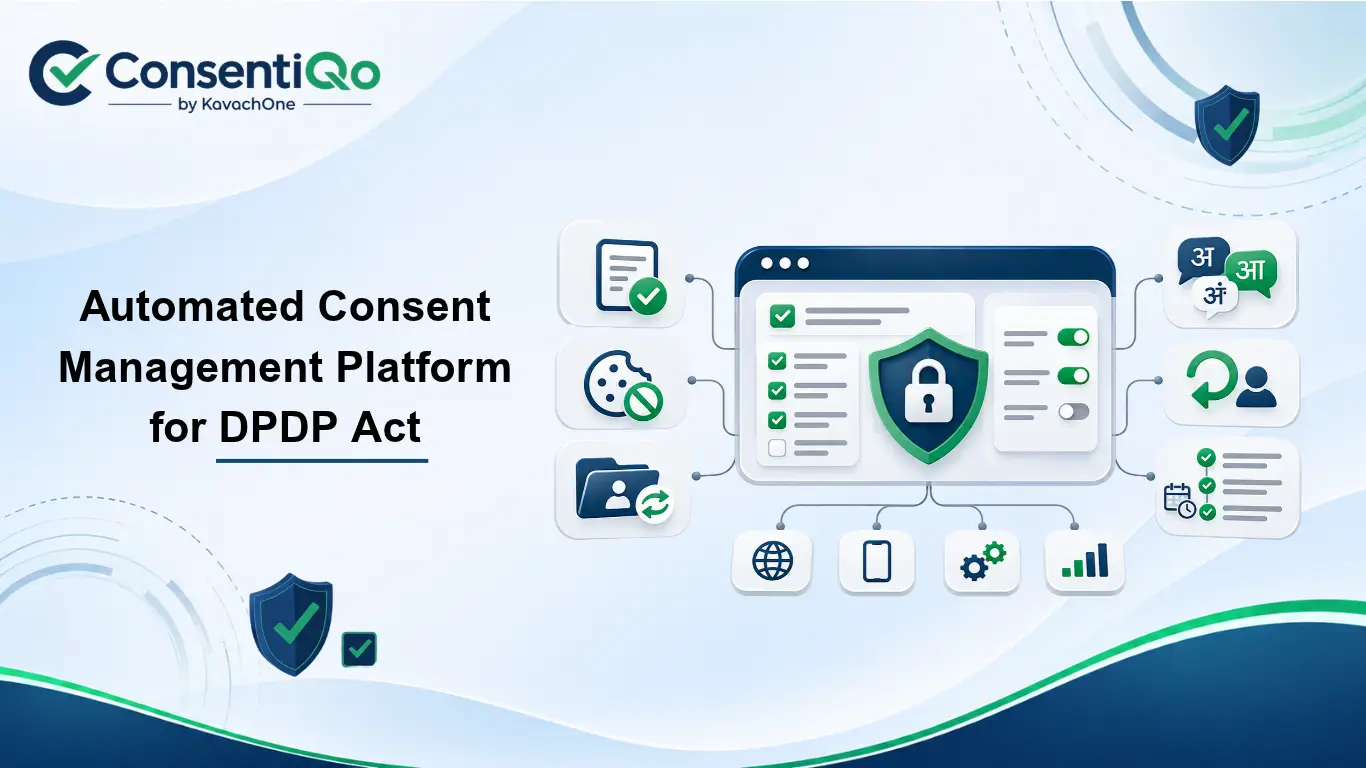
Manually managing user permissions across websites, apps, CRMs, and marketing tools is no longer practical under India's DPDP Act, 2023. For example, if a customer opts out of WhatsApp messages on your site but still receives automated emails from another system, that's a compliance issue. Using an automated consent management platform helps by centralizing consent, handling withdrawals instantly, and keeping secure records for audits.
ConsentiQo, developed by KavachOne for Indian Data Fiduciaries, automates the full consent process. It covers everything from purpose-based notices in all 22 Indian languages to keeping audit logs for 7 years, all without manual delays.
Why Manual Consent Tracking Fails Under the DPDP Act, 2023
Under the DPDP Act, organizations that decide on the purpose and means of processing personal data are Data Fiduciaries, and individuals who provide data are Data Principals. Spreadsheets, static website checkboxes, and isolated opt-out forms all fail the statutory test in four respects:
Bundled Consent Violations: Section 6 of the DPDP Act requires that consent be free, specific, informed, unconditioned and unambiguous. It is not acceptable to bundle terms of service, analytics tracking and third-party marketing into a single 'I agree' box.
Delayed Withdrawal Propagation: The Act requires withdrawing consent to be as easy as giving it. If a user revokes permission on your app, manual workflows often take days to update downstream marketing tools, exposing your business to non-compliance.
Language Accessibility Gaps: Section 5 requires Data Fiduciaries to present privacy notices in English or any of the 22 languages specified in the Eighth Schedule of the Indian Constitution. Static English-only banners leave regional user bases uninformed.
Missing Burden-of-Proof Records: If a Data Principal files a complaint with the Data Protection Board of India, the burden of proving valid consent rests entirely on the Data Fiduciary. Unverified database flags do not hold up as cryptographic proof.
Compliance Requirements for DPDP Consent Automation
To operationalize DPDP compliance across digital touchpoints, your consent architecture must enforce specific technical workflows:
1. Granular, Purpose-First Consent Capture
Every data processing activity, like order fulfillment, personalized recommendations, or promotional SMS, must be listed separately. Pre-ticked boxes should not be allowed, so users have to actively choose each purpose.
2. Itemized Notices in 22 Scheduled Indian Languages
Before or at the time of requesting consent, businesses must serve a clear notice detailing what personal data is collected, the exact purpose of processing, and how the user can exercise their rights or file a grievance. Dynamic localization ensures a user in Tamil Nadu or Maharashtra can read and act upon the notice in Tamil or Marathi seamlessly.
3. Real-Time Revocation and Downstream Sync
Suppose a fintech borrower revokes consent for cross-sell loan offers within your app. Your DPDP-compliant consent management platform must be configured to instantly trigger webhooks or REST APIs to suppress that user's profile across your CRM, ad networks, and messaging gateways.
4. Automated Data Principal Rights (DSAR) and Grievance Workflows
Sections 11 to 14 grant Data Principals the right to access a summary of their personal data, the right to request correction or erasure of their data, and the right to access a readily available mechanism for grievance redressal. Self-service portals eliminate the back-and-forth of email and allow you to track your turnaround SLAs.
5. Verifiable Parental Consent for Children's Data
Under section 9, you need verifiable consent from a parent or a lawful guardian in respect of the processing of personal data of individuals under 18. There is a strict ban on behavioral targeting and behavioral tracking of minors.
How ConsentiQo Automates DPDP Act Compliance
ConsentiQo is an India-first consent and privacy management platform made in India by KavachOne. It removes manual compliance work and helps maintain strong conversion rates. Instead of using Western cookie tools that may not fit, ConsentiQo is built to match DPDP rules directly.
Core Features of ConsentiQo
Purpose-First Consent Engine: Configure customizable, granular consent banners and preference centers, in which each processing purpose is disclosed and captured independently.
Native Support for All 22 Indian Languages: Automatically detects browser locale or user selection to render legally accurate consent notices across Hindi, Bengali, Marathi, Telugu, Tamil, Gujarati, Kannada, Malayalam, Odia, Punjabi, and all other Eighth Schedule languages.
Automated Cookie Scanner & Script Blocking: The system keeps scanning your website to find, sort, and block third-party tracking pixels and analytics cookies until the user gives clear permission.
One-Click DSAR & Grievance Redressal Hub: Data Principals get a built-in self-service tool to see their consent history, withdraw permissions, or send access, correction, and deletion requests. This can reduce request resolution times by up to 80%.
Tamper-Proof 7-Year Audit Trail: Every consent grant, modification, renewal, and withdrawal is time-stamped, user-attributed, and retained for 7 years with instant PDF and CSV exports for regulatory audits.
Consent Expiry & Automated Renewal: The system tracks when consent expires, sends reminders for renewal, and asks for new consent if the processing purpose changes.
DPDP Section 9 Children's Data Workflows: Built-in age-gating and verifiable parental consent flows ensure safe, compliant handling of minor data.
Plug-and-Play Integrations: Deploy via a single script tag or native plugins for Next.js, React, and WordPress, and sync consent states in real time using REST APIs and webhooks.
Key Business Benefits of Deploying ConsentiQo
Operational Area | Manual or Generic Tools | ConsentiQo Automated Workflow |
Regulatory Alignment | Built primarily for EU GDPR; lacks native DPDP notice and Section 9 workflows. | Purpose-built for India's DPDP Act with automatic regulatory rule updates included. |
Pricing Predictability | Metered per-consent or per-API fees in USD that spike as web traffic scales. | Transparent INR pricing with unlimited consent events under fair-use limits. |
Data Residency | Frequently routes consent logs to US or EU servers. | Offers India-hosted tenant infrastructure to support local data governance. |
Audit Readiness | Fragmented logs across CRMs and web forms take weeks to compile. | Instant, cryptographically verifiable PDF/CSV audit exports retained for 7 years. |
End-to-End GRC Support | Software-only support with generic global ticketing. | Backed by KavachOne's Indian cybersecurity and DPDP compliance specialists for broader data discovery, RoPA, and audit readiness. |
Real-World Use Cases Across Indian Industries
Banking, Fintech, and NBFCs: A digital lending app collects KYC details, bureau pull permissions, and promotional offers during onboarding. ConsentiQo separates mandatory loan-processing notices from optional marketing toggles, logs verifiable consent artifacts, and syncs opt-outs directly with the lender's CRM.
E-Commerce and D2C Retail: An online retailer running campaigns across WhatsApp, email, and Meta Ads uses ConsentiQo's automated cookie scanner to hold marketing pixels until checkout or banner consent is granted, while letting shoppers manage channel-specific preferences in their native language.
Healthcare and EdTech Platforms: An EdTech platform for school students uses ConsentiQo's Section 9 parent-verification workflow to obtain parental consent before account activation and to turn off behavioral ad tracking for minor profiles.
Conclusion: Operationalize DPDP Compliance Without Slowing Growth
Indian organizations that are relying on manual trackers or retrofitted cookie banners are exposed to compliance gaps and operational pain. A fully automated consent management platform for DPDP Act compliance makes privacy governance a smooth, customer-focused workflow that builds trust and keeps all your marketing and product systems in sync.
Ready to automate your DPDP consent workflows? Explore ConsentiQo to deploy purpose-first consent notices in 22 Indian languages, streamline DSAR requests, and maintain 7-year audit readiness—or connect with the compliance experts at KavachOne for a personalized demo and end-to-end DPDP readiness walkthrough.
Frequently Asked Questions
An automated consent management platform (CMP) for the DPDP Act is software that collects user permissions for specific purposes, displays privacy notices in Indian languages, handles consent withdrawals instantly across connected tools, and maintains secure audit logs for regulatory compliance.
Related Articles
View all blogs→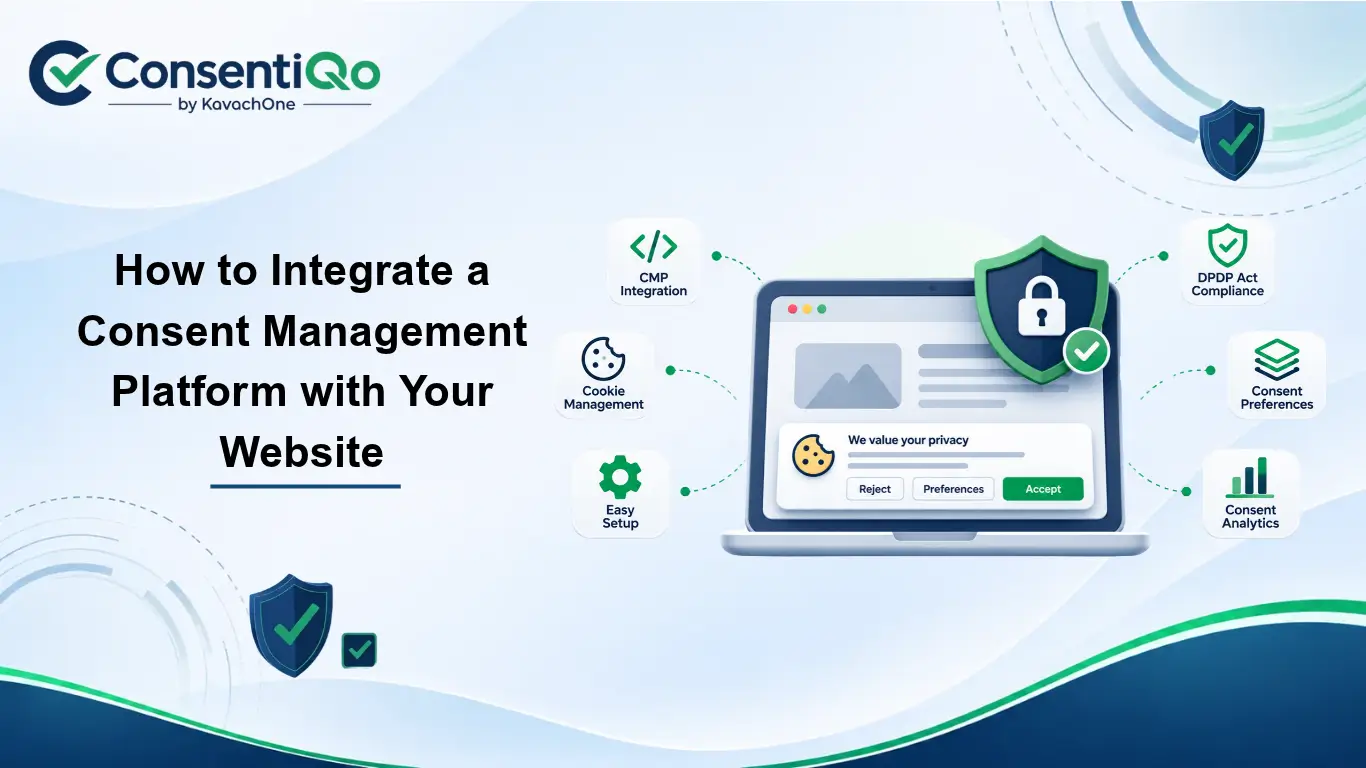
How to Integrate a Consent Management Platform with Your Website
Execute a seamless CMP integration on your website. Follow our step-by-step setup guide for DPDP compliance, auto script blocking, and ConsentiQo sync.
Budget-Friendly Consent Management Platform for DPDP Act Compliance for Growing Teams
Looking for a budget-friendly consent management platform for DPDP Act compliance? Automate 22-language notices, 7-year audit logs & zero per-consent fees.
Online Consent Management and Monitoring Platform as per DPDP Act: Why Indian Businesses Need ConsentiQo
Automate DPDP Act compliance with ConsentiQo—an online consent management and monitoring platform with 22-language notices, real-time tracking & audit logs.