
ConsentiQo for BFSI & SEBI-Regulated Entities: Securing Customer Consent Under DPDP
Secure DPDP Act 2023 compliance for banks, NBFCs, and SEBI-regulated entities with ConsentiQo by KavachOne. Automate 22-language consent and audit trails.
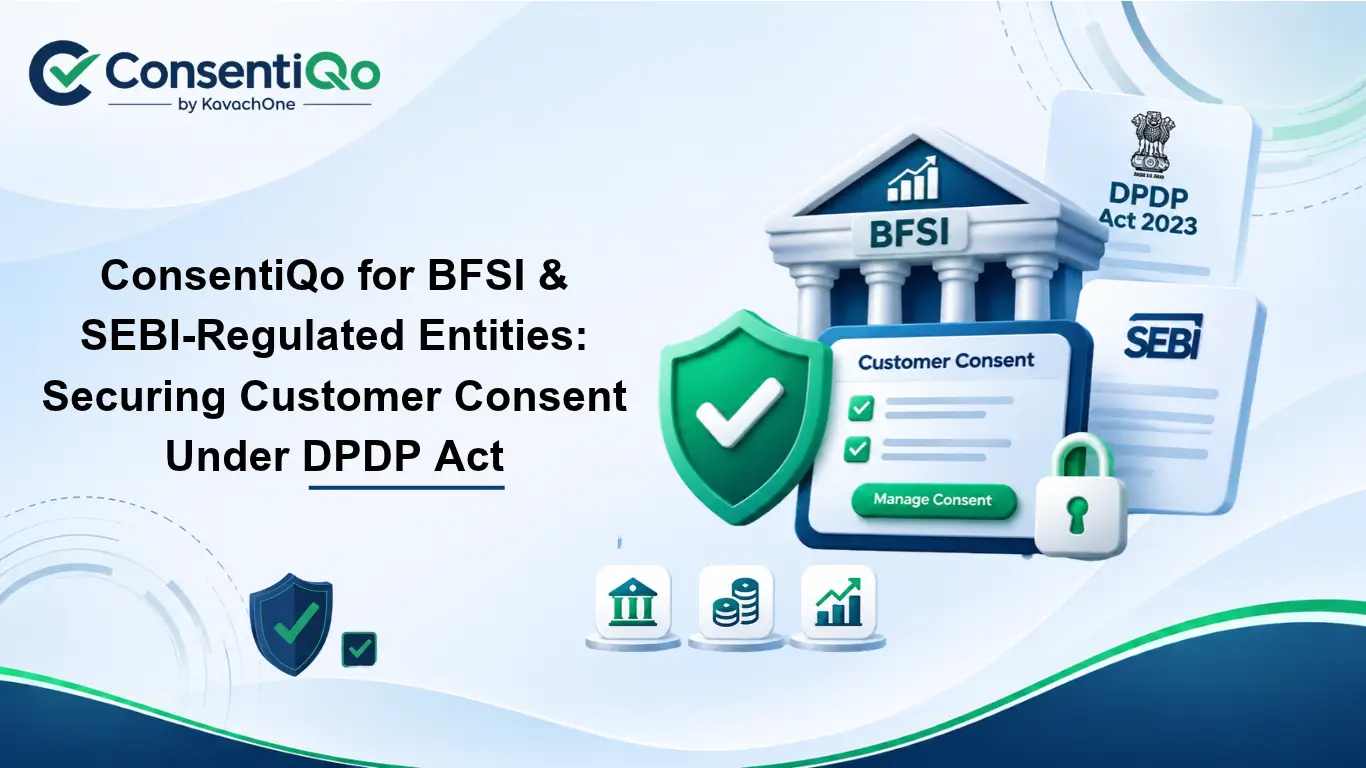
India’s financial sector operates at the intersection of high-volume digital transactions and strict regulatory oversight. For banks, NBFCs, insurers, stock brokers, Asset Management Companies (AMCs), and depository participants, collecting customer data is an everyday necessity. With India’s Digital Personal Data Protection (DPDP) Act, 2023 and the DPDP Rules, 2025 moving into enforcement—alongside SEBI’s Cybersecurity and Cyber Resilience Framework (CSCRF) and RBI governance mandates—legacy consent mechanisms no longer meet regulatory scrutiny. Implementing ConsentiQo for BFSI & SEBI-Regulated Entities: Securing Customer Consent Under DPDP provides financial institutions with an automated, audit-ready foundation for capturing, enforcing, and proving customer consent without slowing digital onboarding.
Why Financial Institutions Face Unique DPDP Consent Challenges
Financial institutions are different from regular Data Fiduciaries. Every step a customer takes, such as opening a demat account, applying for a loan, or investing in mutual funds, involves handling sensitive data, including PAN, Aadhaar, bank account details, and transaction history.
Overlapping Mandates: DPDP Act, RBI Directions, and SEBI CSCRF
BFSI and capital market intermediaries must simultaneously satisfy multiple regulators:
DPDP Act 2023 & Rules 2025: Require free, specific, informed, unconditional, and unambiguous consent through a clear affirmative action, backed by an itemized privacy notice.
SEBI CSCRF Guidelines: Mandate that SEBI-regulated entities align their data security, privacy protocols, and consent workflows with India’s data protection law.
RBI IT Governance & KYC Rules: Require strict data governance and statutory record retention (such as PMLA and KYC retention rules).
Separating Statutory Processing from Consent-Based Marketing
A common compliance mistake in BFSI is combining mandatory KYC verification with promotional cross-sell. Section 7 of the DPDP Act states that if personal data is processed only to meet a legal obligation, such as KYC or regulatory reporting, consent is not needed. However, if you use the same customer profile for credit card offers, advisory newsletters, third-party insurance, or behavioral analytics, you must get separate, specific opt-in consent.
DPDP Compliance Requirements for BFSI & Capital Markets
To avoid penalties that can reach up to ₹250 crore under the DPDP Act—as well as supervisory action from RBI or SEBI—financial institutions must operationalize five core consent requirements:
No Pre-Ticked Boxes or Bundled Notices: Customers must actively opt in to each distinct processing purpose independently.
Multilingual Accessibility: Privacy and consent notices must be clear and available in English and all 22 languages listed in the Eighth Schedule of the Indian Constitution. Hence, investors and borrowers across Bharat understand what they are agreeing to.
Frictionless Consent Withdrawal: Withdrawing consent must be as easy as giving it, triggering immediate downstream suppression across marketing tools, CRMs, and partner APIs.
Statutory Retention vs. Erasure Rights: When a customer submits an erasure request, the institution must delete non-mandatory marketing or profiling data while lawfully retaining records required under PMLA, RBI, or SEBI regulations—and clearly communicating that distinction to the customer.
Tamper-Evident Audit Trails: Organizations must maintain verifiable logs proving who consented, when they consented, which notice version they saw, and when any preference changed.
Real-World BFSI & SEBI Use Cases for Granular Consent
Stock Brokers & Depository Participants
During the digital account opening process, a broker will collect your KYC documents in accordance with statutory requirements. In parallel, it will offer you margin trading alerts, research calls, and third-party wealth products. Granular consent means that research and promotional communications will only be sent where you have given that specific consent. You can unsubscribe at any time, which will stop all promotional communications without affecting the mandatory contract notes or regulatory disclosures.
Mutual Fund AMCs & Investment Advisers
When retail investors set up an SIP via a web portal or mobile app, they typically deal with multiple registrars, payment gateways, and analytics platforms. Purpose-bound consent will capture separate consents for transaction processing, portfolio insights, and partner sharing, and will present the notices in the investor's preferred regional language.
Banks, NBFCs & Digital Lending Platforms
Digital lenders are very keen to have access to device telemetry, credit bureau pulls, and partner cross-sell offers. By separating underwriting permissions from partner cross-sell sharing, NBFCs effectively avoid allegations of dark patterns and maintain clean audit trails for RBI inspections.
How ConsentiQo Powers DPDP Consent Management for Financial Institutions
Built by KavachOne specifically for India’s regulatory landscape, ConsentiQo automates end-to-end consent collection, preference enforcement, and audit readiness across web portals, mobile apps, and investor dashboards.
Key Capabilities Designed for BFSI & SEBI Entities
Native 22-Language Consent Notices: Dynamically renders itemized, plain-language consent banners and privacy notices in English and all 22 scheduled Indian languages.
Purpose-First Granular Architecture: Allows compliance teams to configure independent toggles for KYC communication, product updates, cross-selling, cookies, and third-party sharing.
Revocation-First Webhook Automation: When a customer or investor revokes consent, ConsentiQo immediately fires real-time webhooks to CRMs, marketing automation platforms, and internal databases to halt unauthorized processing.
Self-Service Privacy Center & Data Principal Rights: Provides a branded Privacy Center where customers can view active consents, update preferences, or submit access, correction, and erasure requests with structured workflows.
7-Year Audit-Ready Consent Logs: Automatically stores timestamped, tamper-evident records of every opt-in, modification, and withdrawal to support SEBI CSCRF, RBI, and Data Protection Board audits.
Fast Deployment & Predictable Pricing: Integrates via lightweight scripts or plug-and-play SDKs for React, Next.js, and WordPress without per-consent or per-API metering surprises.
Business Benefits Beyond Regulatory Checkboxes
Higher Investor & Borrower Trust: Transparent, regional-language disclosures reduce onboarding drop-offs and build long-term customer confidence.
Reduced Compliance Overhead: Automated cookie scanning, versioned notices, and instant audit exports replace manual spreadsheet tracking.
Unified Ecosystem Readiness: When paired with KavachOne’s broader privacy governance suite—including PII discovery, automated RoPA/DPIA workflows, and third-party vendor risk management—BFSI teams gain end-to-end DPDP control from a single ecosystem.
Secure Customer Consent Across Your Financial Ecosystem
Regulatory checks across India’s banking, lending, and capital markets are increasing. With ConsentiQo for BFSI & SEBI-Regulated Entities, your institution can move from scattered opt-ins to clear, multilingual, and audit-ready consent automation.
Ready to modernize your DPDP consent architecture? Book a personalized demo of ConsentiQo with our expert compliance team today to see how fast you can deploy 22-language consent banners, real-time CRM revocation sync, and 7-year audit logs across your digital touchpoints.
Frequently Asked Questions
Yes. Any SEBI-regulated intermediary that handles digital personal data of Indian citizens must comply with the DPDP Act, 2023, as well as SEBI’s Cybersecurity and Cyber Resilience Framework (CSCRF).
Related Articles
View all blogs→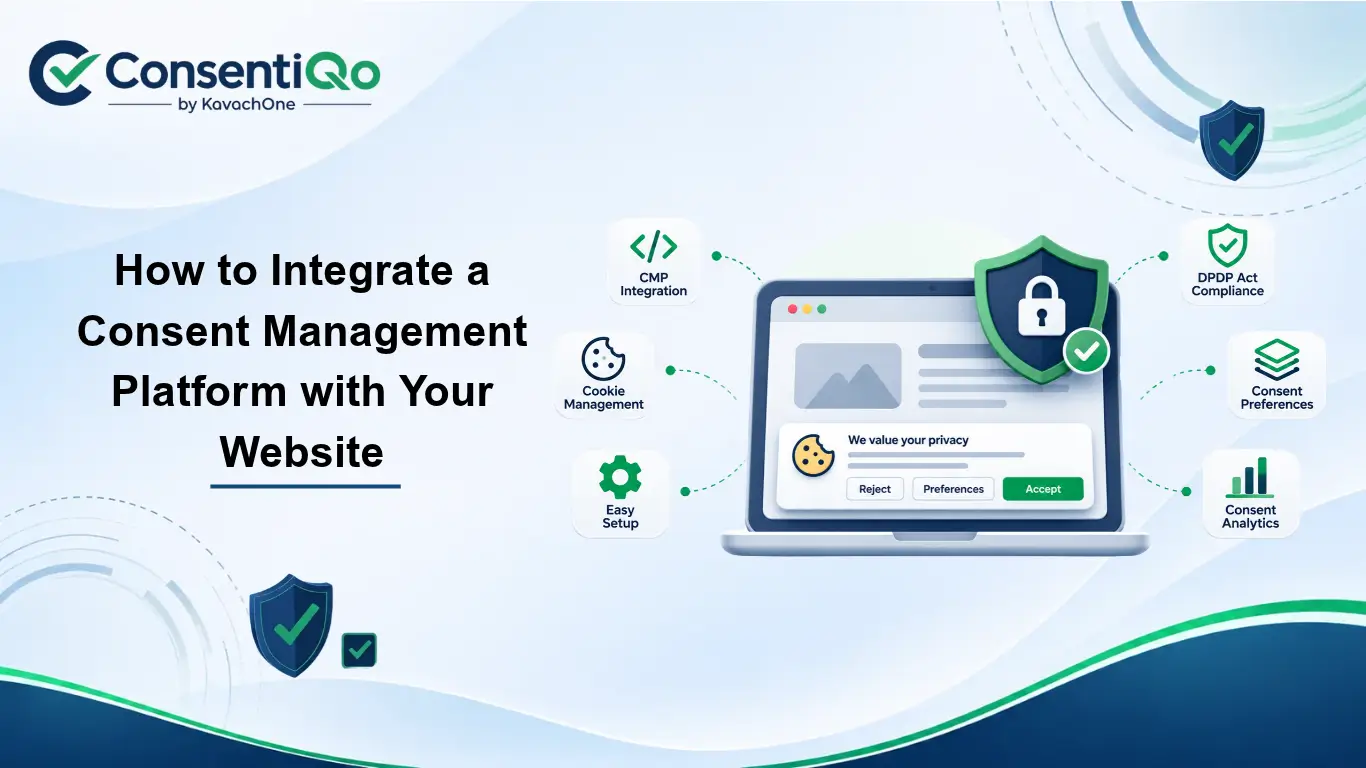
How to Integrate a Consent Management Platform with Your Website
Execute a seamless CMP integration on your website. Follow our step-by-step setup guide for DPDP compliance, auto script blocking, and ConsentiQo sync.
Budget-Friendly Consent Management Platform for DPDP Act Compliance for Growing Teams
Looking for a budget-friendly consent management platform for DPDP Act compliance? Automate 22-language notices, 7-year audit logs & zero per-consent fees.
Online Consent Management and Monitoring Platform as per DPDP Act: Why Indian Businesses Need ConsentiQo
Automate DPDP Act compliance with ConsentiQo—an online consent management and monitoring platform with 22-language notices, real-time tracking & audit logs.